
DEXA BMD
What Does DEXA Mean?
DEXA stands for Dual-Energy X-ray Absorptiometry.
- Dual-energy: Uses two different X-ray beams
- X-ray absorptiometry: Measures how much of the X-ray is absorbed by bone
Because bone absorbs X-rays differently than soft tissue, the machine can calculate how dense (strong) your bones are.
What is Bone Mineral Density (BMD)?
Bone Mineral Density (BMD) refers to the amount of mineral (mainly calcium) present in your bones.
- Higher BMD = stronger bones, lower fracture risk
- Lower BMD = weaker bones, higher fracture risk
A DEXA scan measures this density most commonly at:
- The hip
- The spine
- Sometimes the
forearm
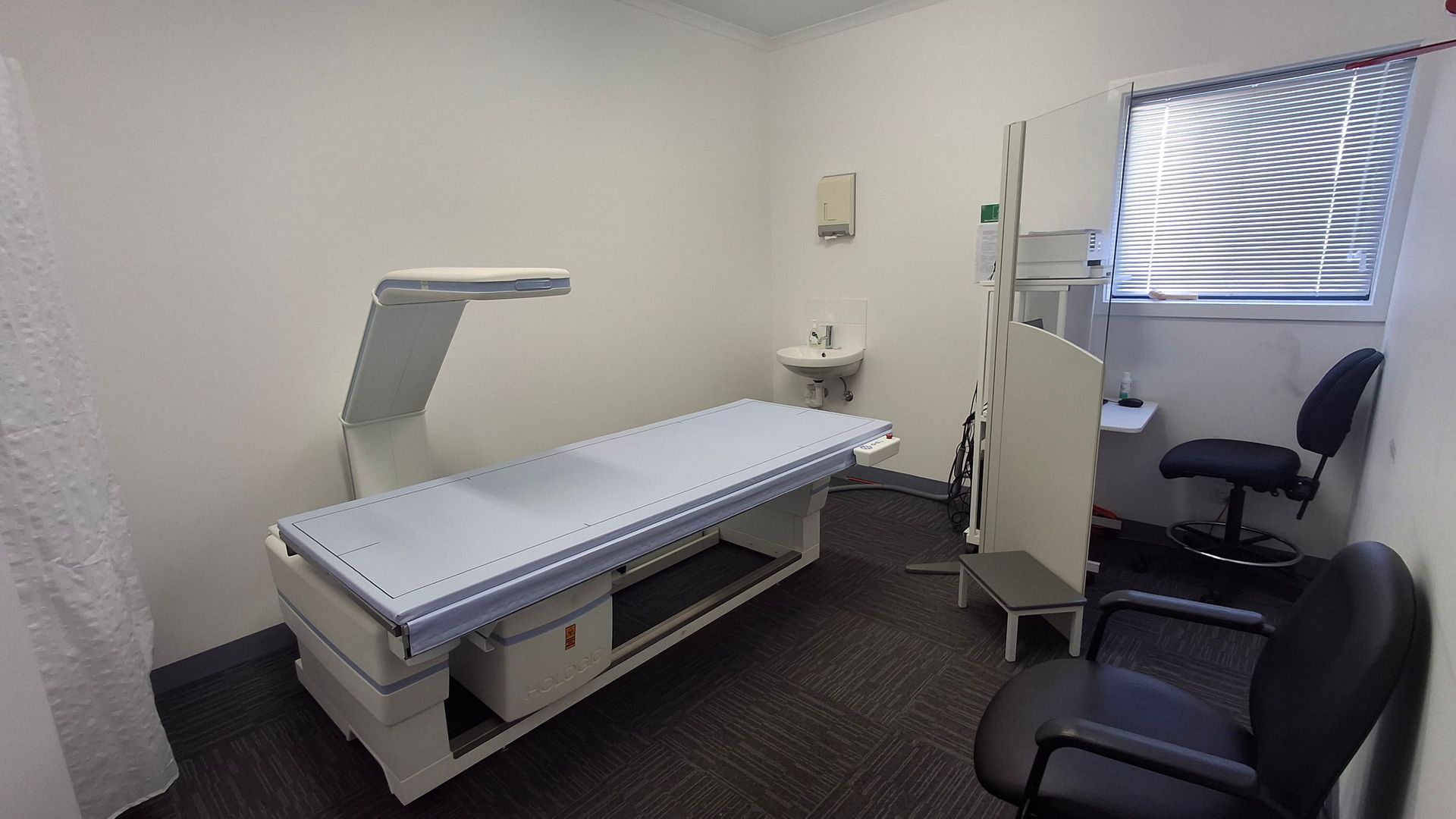
What is a DEXA BMD??
DEXA BMD or Dual-Energy X-ray Absorptiometry Bone Mineral Density scan is a medical imaging test used to measure the strength and density of your bones. This test is widely regarded as the gold standard for diagnosing osteoporosis and osteopenia.
A DEXA scan tells us how strong your bones are and whether they are at risk of breaking more easily than normal. Early diagnosis allows for timely intervention and fracture prevention.
Who is suitable for a DEXA BMD?
A DEXA scan is recommended for individuals at risk of osteoporosis or bone fractures. It is particularly useful for:
- Postmenopausal women (especially those over 65) due to a higher risk of bone loss.
- Individuals over 70 years old.
- Individuals with a history of fractures after minor falls or injuries.
- People with osteoporosis risk factors, such as:
- Family history of osteoporosis.
- Long-term use of corticosteroids (e.g., prednisone).
- Low body weight or eating disorders.
- Smoking and excessive alcohol consumption.
- Lack of calcium and vitamin D in the diet.
- Medical conditions like rheumatoid arthritis, thyroid disorders, or chronic kidney disease.
- People undergoing osteoporosis treatment needing to monitor bone density changes over time.
Benefits of DEXA BMD
A DEXA scan provides essential information about bone health and helps in:
- Early detection of osteoporosis and osteopenia before fractures occur.
- Assessing fracture risk, especially in older adults.
- Monitoring bone density changes over time, particularly for individuals on osteoporosis treatment.
- Providing a baseline measurement for younger individuals at risk of bone loss.
Preparation for a DEXA BMD Scan
What to bring:
- Referral from your doctor.
- Previous DEXA scan reports (if available) for comparison.
- A list of medications you are taking, especially if they affect bone health (e.g., calcium supplements, steroids, or osteoporosis medications).
What to wear:
- Wear comfortable clothing without metal buttons, zippers, or buckles around the waist and hips.
- Avoid jewellery or metal accessories, as they can interfere with the scan.
How long will the scan take??
- The scan takes approximately 15 minutes, but the entire appointment may take 30 minutes, including preparation.
Dietary Considerations:
- Avoid taking calcium supplements (including multivitamins and antacids with calcium) 24 hours before the scan, as they can affect results.
- There is no need to fast—you can eat and drink as usual.
Other Considerations:
- If you have had a barium X-ray, contrast CT scan, or nuclear medicine test in the last two weeks, inform your doctor, as contrast materials can interfere with the DEXA results.
- Pregnant women or those who suspect they are pregnant should inform the technician, as the test uses X-ray radiation.
DEXA BMD Procedure
A DEXA scan is quick, painless, and non-invasive. Here’s what happens during the test:
- The technologist will ask you to remove all metallic objects around your waist or hips.
- An image of your lower spine, hip, and occasionally your forearm will be taken.
- Your bone density measurement will be scored and compared with those of the same age, weight, gender, height, and ethnicity.
- From these readings, the doctor can determine your bone density score.
What to expect after a DEXA BMD scan?
A DEXA scan does not require any recovery time. You can return to daily activities (eating, drinking, all medications) immediately after the test.
Understanding Your Results:
- A radiologist will review your scan and generate a T-score and Z-score:
- T-score:
- Above -1.0 = Normal bone density
- Between -1.0 and -2.5 = Osteopenia (low bone mass)
- Below -2.5 = Osteoporosis (very low bone mass)
- Z-score: Used mainly for children, pre-menopausal women, and men under 50.
Follow-up with your Doctor:
- Your doctor will discuss treatment options if low bone density is detected.
- Lifestyle changes, supplements, or medications may be recommended if results show osteopenia or osteoporosis.
How often should I have a DEXA scan:
- If at risk of bone loss, a DEXA scan is usually repeated every 1–2 years to track changes in bone density.
- If there is little or no risk of bone less, a DEXA scan may only be required every 5 years.
Is it painful and are there any side effects?
There are no injections for this scan. However, you will need to be able to lie on your back for approximately 15 minutes.
Can I take my normal medication?
Yes. Take all of your medications (as long as they do not contain calcium).
DEXA BMD Results
The prognosis depends on the results and whether osteoporosis, osteopenia, or normal bone density is detected.
- Normal Bone Density: If your results are within the normal range (T-score above -1.0), your prognosis is excellent, and no immediate treatment is required. A healthy diet, weight-bearing exercise, and lifestyle adjustments can help maintain bone strength.
- Osteopenia (Low Bone Mass): If your T-score is between -1.0 and -2.5, you may be at risk for osteoporosis in the future. You can slow or prevent further bone loss with early intervention, such as calcium and vitamin D intake, exercise, and possibly medication.
- Osteoporosis: A T-score below -2.5 indicates osteoporosis, increasing the risk of fractures. The prognosis depends on treatment adherence, including medications, physical therapy, and lifestyle changes. Although osteoporosis is irreversible, proper management can significantly reduce fracture risk and improve bone health.
DEXA BMD risks
A DEXA scan is very safe - the radiation dose to the patient is less than a single day of natural background radiation.
DEXA BMD Costs
Medicare Coverage
- Medicare covers a DEXA scan for eligible patients, including:
- Anyone over 70 years of age (every 5 years).
- Postmenopausal women aged 70 or older (one scan every 2 years).
- People with certain medical conditions that lead to bone loss (e.g., osteoporosis, chronic steroid use, endocrine disorders).
- Patients who have had a previous low-impact fracture.
- Individuals starting or monitoring osteoporosis treatment.