
Body Composition Scan (DEXA)
What is a Body Composition Scan (DEXA)?
A Body Composition Scan is a medical imaging or assessment technique used to measure and analyse the different components that make up your body. Rather than simply looking at total weight, it provides a detailed breakdown of:
- Body fat percentage: The proportion of fat in your body
- Lean muscle mass: The amount of muscle tissue
- Bone density: The strength and mineral content of bones
- Visceral fat levels: Fat stored around internal organs
One of the most widely used methods is the DEXA scan, which uses very low-dose X-rays to measure the exact amounts of fat, muscle and bone in the body. This type of scan is commonly used in preventive health, sports performance and weight management. It provides a far more accurate and meaningful picture of health compared to traditional measures like body weight or Body Mass Index (BMI), which do not distinguish between fat and muscle.
Who is suitable for a Body Composition (DEXA) Scan?
A Body Composition Scan is available for anyone as it is a self-referred scan (does not require a doctor’s referral), from those managing medical conditions to those simply wanting a clearer understanding of their health and fitness.
General Population
- Older adults: To assess muscle loss (sarcopenia)
- Individuals wanting better health insight: People who want more than just a number on the scales
- Weight management patients: Those trying to lose fat, gain muscle, or maintain weight
- Preventive health seekers: Individuals aiming to reduce long-term risks of chronic disease
Athletes and Active Individuals
- Professional and recreational athletes: To optimise training and performance
- Bodybuilders and fitness enthusiasts: For precise muscle and fat tracking
- Rehabilitation patients: Monitoring muscle loss or gain during recovery
The scan is very safe and uses minimal radiation, but is not recommended for pregnant individuals.
Benefits of a Body Composition (DEXA) Scan
Accurate and Detailed Health Assessment
- Beyond weight measurement: Differentiates fat, muscle, and bone
- Regional analysis: Identifies where fat or muscle is distributed in the body
- Visceral fat detection: Helps assess risk for metabolic and cardiovascular diseases
Improved Clinical Decision-Making
- Personalised treatment plans: Enables tailored medical and fitness interventions
- Monitoring disease progression: Useful in chronic illness or recovery
- Medication and therapy guidance: Especially in metabolic or hormonal conditions
Enhanced Weight Management
- Track fat loss vs muscle gain: Ensures healthy and sustainable progress
- Motivation and accountability: Objective data supports patient engagement
- Avoid misleading results: Prevents reliance on scales alone
Bone Health Evaluation
- Early detection of bone loss: Particularly with DEXA scans
- Osteoporosis risk assessment: Supports early intervention strategies
Performance Optimisation
- Athletic performance tracking: Helps fine-tune training programs
- Injury prevention: Identifies muscle imbalances
- Recovery monitoring: Tracks changes during rehabilitation
Preventive Health Benefits
- Early risk identification: Detects unhealthy fat distribution
- Long-term health planning: Supports lifestyle changes before disease develops
Overall, the scan provides a comprehensive snapshot of body composition, enabling more informed decisions for both patients and clinicians.
Preparation for a Body Composition (DEXA) Scan
Preparing properly for a Body Composition Scan helps ensure accurate, clinically meaningful results.
General Preparation
- Wear light, comfortable clothing
- Remove accessories
- Avoid heavy meals beforehand
- Stay hydrated
Activity and Lifestyle Considerations
- Avoid intense exercise beforehand
- Limit alcohol and caffeine
- Maintain routine
Medical and Safety Considerations
- Inform your provider if you are pregnant
- Let the technologist know if you may be unable to stay still for the duration of the scan (approximately 7 minutes)
Practical Tips for Accuracy
- Use the bathroom beforehand
- Follow clinic-specific instructions
Proper preparation ensures that your results are reliable and can be confidently used for clinical decisions or progress tracking.
Body Composition Scan Procedure
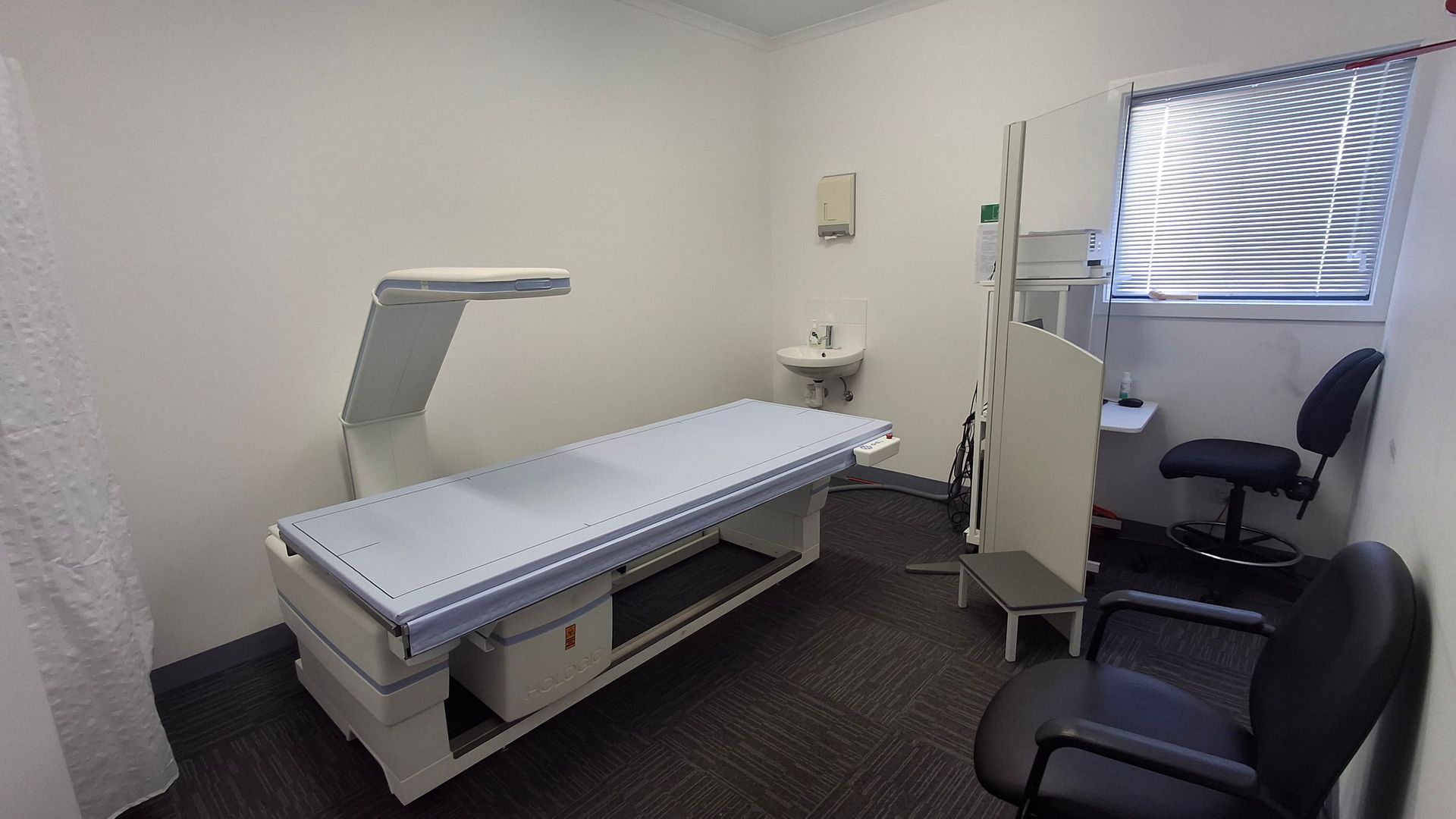
The procedure is quick, painless, and non-invasive. At Broken Hill Radiology, we use a Hologic DEXA machine to perform the scan. A referral is not necessary for these scans. However, you may discuss the results with a relevant healthcare professional.
DEXA Scan Procedure
- Positioning: You will lie flat on a padded table while a scanning arm passes slowly over your body
- Stillness is important: You will be asked to remain still for the duration of the scan to ensure accurate imaging
- Duration: Typically takes 5–15 minutes
- Sensation: You will not feel anything during the scan except the table moving
What to Expect After a Body Composition (DEXA) Scan?
After the scan, you can return to your normal daily activities immediately. No recovery period is required.
Immediate Outcomes
- Instant results: Broken Hill Radiology provides results immediately after the scan
- Detailed report: Includes breakdowns of fat mass, muscle mass, bone density, and regional analysis
- Visual data: Graphs, charts, or 3D images are included in your report
Results
- Discussion with your provider: You may book an appointment with a doctor, allied health professional, or fitness specialist if you would like them to explain your results
- Baseline measurement: Used as a reference for future comparisons
Practical Considerations
- Cost and access: Body Composition Scans (DEXA) are not covered by Medicare. At Broken Hill Radiology, we understand that these scans can assist many with obtaining their lifestyle goals and improving short-term and long-term health. That is why we offer the scans at an affordable price.