
CT Scan
What is a CT Scan?
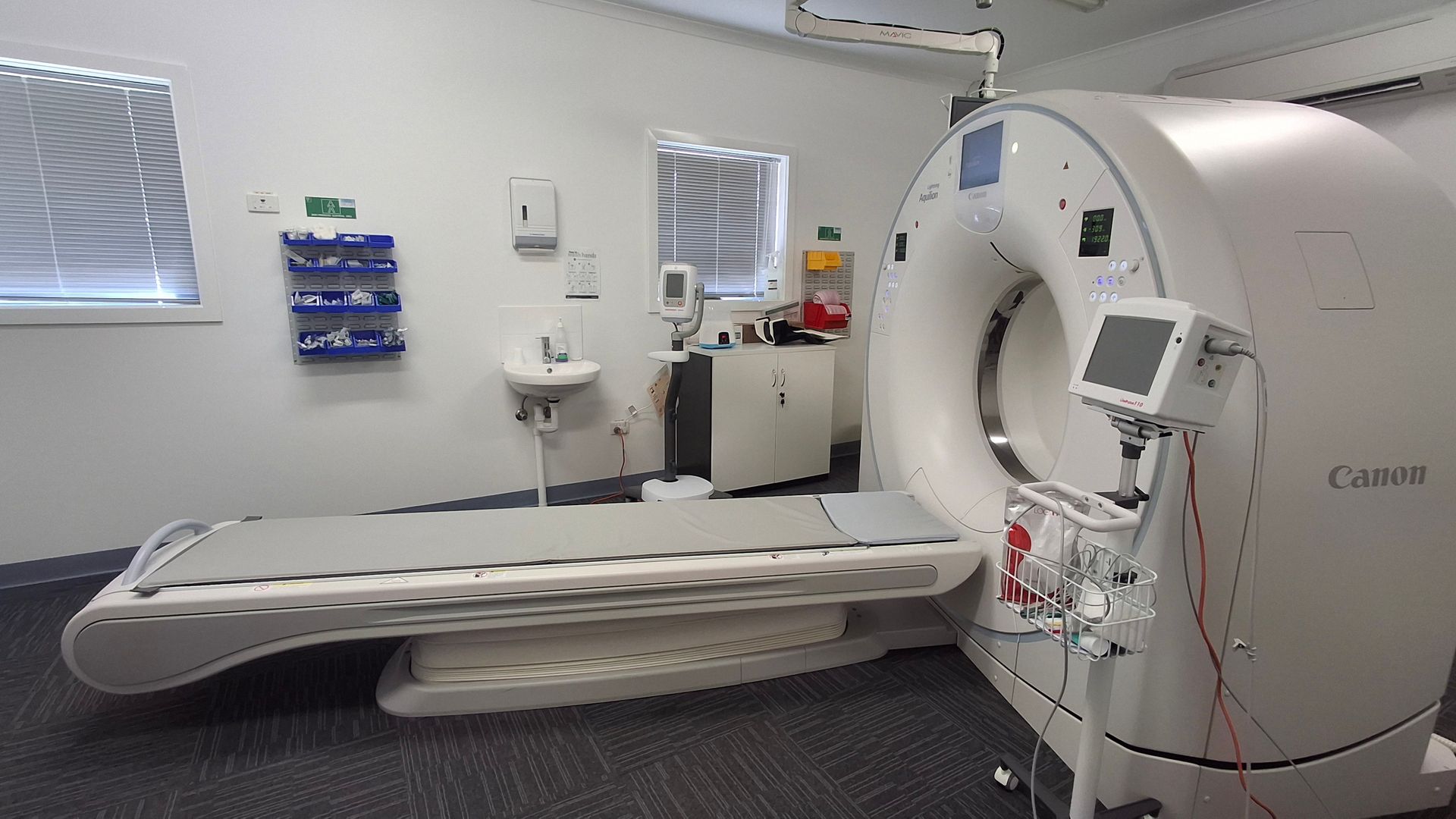
Computed tomography (commonly referred to as a ‘CT scan’) is an advanced medical imaging examination that uses X-rays to create detailed, cross-sectional images of the body. Unlike a standard X-ray, which produces a single flat image, a CT scan takes multiple images from different angles and combines them to form a more complete and precise view of internal structures.
This allows doctors to examine bones, organs, blood vessels, and soft tissues in much greater detail. CT scans are commonly used in hospitals and medical imaging practices to diagnose a wide range of conditions, guide treatments, and monitor disease progression.
CT scans are fast, accurate, and non-invasive, making them a cornerstone of modern diagnostic medicine.
Who is suitable for a CT Scan?
A CT scan is suitable for most individuals when detailed diagnostic imaging is required. Your doctor will recommend this test based on your symptoms, medical history, and clinical findings.
- Patients with unexplained symptoms: Persistent pain, headaches, dizziness, or unexplained weight loss may require further investigation with CT.
- Trauma or injury cases: CT scans are often used to assess injuries to the head, chest, abdomen, extremities, or spine following accidents.
- Cancer diagnosis: Suitable for detecting tumours, staging cancer, and monitoring response to treatment.
- Infections or inflammation: Helps identify abscesses, organ infections, or inflammatory conditions.
- Vascular concerns: Used to evaluate blood vessels and detect blockages.
- Pre-surgical planning: Provides detailed anatomical information to guide surgeons before procedures.
- Follow-up and monitoring: Used to track disease progression or recovery after treatment.
However, CT scans may not be suitable for everyone:
- Pregnant patients: Due to radiation exposure, CT scans are generally avoided unless absolutely necessary.
- Patients with contrast allergies: Patients with a history of reaction to contrast dye may require alternative imaging or a non-contrast CT scan only.
- Kidney impairment: Contrast dye may not be suitable for patients with significantly reduced kidney function. Alternative imaging or a non-contrast CT scan may be required for these patients.
Your doctor will carefully weigh the benefits and risks before recommending a CT scan.
Benefits of a CT Scan
CT scans offer several important advantages in medical diagnosis and treatment planning:
- Detailed imaging: Provides highly detailed cross-sectional images of bones, organs, and soft tissues, allowing for accurate diagnosis.
- Fast and efficient: Most scans are completed within minutes.
- Non-invasive: No surgical procedure is required to visualise internal structures.
- Wide range of applications: Can assess all regions of the body, including the brain, chest, abdomen, pelvis, spine, extremities and joints.
- Early detection of disease: Can help identify conditions such as cancer, internal bleeding, or infections at an early stage.
- Guides medical procedures: CT imaging is often used to assist with biopsies and steroid injections.
- 3D imaging capability: Advanced CT technology can create three-dimensional images for a better understanding of complex anatomy.
- Monitoring treatment response: Allows doctors to evaluate how well a treatment is working over time.
Types of CT Scan
There are several types of CT scans, each designed to assess specific areas or conditions of the body. Here are some examples:
- CT Brain: Used to evaluate the brain for conditions such as bleeding, stroke, tumours, or head injuries.
- CT Chest: Assesses the lungs, heart, and surrounding structures. Commonly used for infections, lung disease, or cancer evaluation.
- CT Calcium Score: Examines the arteries of the heart for calcium deposits.
- CT Abdomen and Pelvis: Examines the liver, kidneys, pancreas, and intestines. Often used for abdominal pain or suspected internal issues.
- CT Angiography (CTA): Uses contrast dye to visualise blood vessels and detect blockages, aneurysms, or vascular abnormalities.
- CT Cardiac Scan: Evaluates the heart and coronary arteries, often used to assess the risk of heart disease.
- CT Colonography (Virtual Colonoscopy): A specialised scan used to examine the colon for polyps or cancer.
- CT Urogram: Focuses on the urinary tract, including kidneys, ureters, and bladder.
- CT Musculoskeletal Scan: Used to assess bones, joints, and soft tissues for fractures, tumours, or degenerative conditions.
- Low-Dose CT Scan (Lung Screen): Uses reduced radiation, commonly applied in screening programs such as lung cancer screening.
Preparation for a CT Scan
What is required before a CT scan?
You may be instructed to fast up to four hours before your procedure. Some scans require the drinking of oral contrast before the scan to better visualise the intestines.
What should a patient tell the radiographer before a CT Scan?
You should alert the radiographer if you are pregnant. There is a very small increase in the risk of cancer/malformation in your unborn child if you are exposed to radiation early in pregnancy.
You should also tell the radiographer if you are asthmatic, diabetic, suffer from kidney issues, have previously had a reaction to contrast, or have any allergies, as these conditions increase the risk of an adverse reaction to the contrast medium.
What to bring for a CT scan?
You may be asked to bring a recent blood test and a list of medications that you are currently taking.
What to wear for a CT scan?
You will likely be asked to remove any metallic items, such as jewellery, piercings, watches, eyewear, and belts, as these can appear on CT scans. You should also avoid clothes with zippers or metal buttons.
You may be asked to remove any clothing that could obstruct the area to be scanned and to wear a medical gown instead, so you should try to wear something comfortable and easy to remove.
How long will the CT scan take?
The CT scan procedure usually takes between 10 and 30 minutes to complete.
CT Scan Procedure
After being escorted to the imaging room, you will be asked to lie on the CT table.
For non-contrast CT scans, no injection is needed.
In CT scans with contrast, the radiographer will typically inject the contrast medium through the IV line into the back of your hand or the inside of your elbow.
You may also experience the following sensations as the contrast agent moves through the body:
- Warmth
- Mild burning
- A metallic taste or smell
- A temporary urge to pass urine
You will then be told to lie still and follow any breathing instructions while the CT scanner table moves you in and out of the machine. The machine will often make a series of whirring and clicking noises as it works.
At various points, the radiographer may talk to you via an intercom, instructing you to hold your breath or keep still.
What to Expect After a CT Scan?
After a CT scan, most patients can return to their normal activities immediately.
- Immediate recovery: Most patients can immediately resume work, driving, and daily routines. You can resume eating if you were required to fast for the CT scan.
- Hydration: If contrast dye was used, drinking plenty of water is recommended to help flush it from your system.
- Monitoring for reactions: Mild side effects such as nausea, warmth, or headache are uncommon and typically short-lived. Seek medical attention if you experience a rash, swelling, or any late reaction.
- Results processing: A radiologist will analyse the images and send a report to your referring doctor.
- Follow-up appointment: Your doctor will discuss the results and any next steps in your care during your follow-up appointment.
For most patients, the CT scan is simply one step in the diagnostic process, helping guide further treatment or reassurance.
CT Scan Risks
CT scans are generally very safe, but like any medical test, they carry some risks that should be understood.
- Radiation exposure: CT scans use more radiation than standard X-rays. While the risk is small, repeated exposure should be minimised where possible.
- Contrast dye reactions:
- Mild reactions: Nausea
- Allergic reactions: Rare but may include rash, itching, or breathing difficulty.
- Kidney effects: Contrast dye can affect kidney function in patients with pre-existing kidney disease.
- Pregnancy considerations: Radiation exposure can pose risks to a developing foetus, so alternative imaging is preferred when possible.
Healthcare providers carefully assess these risks and take steps to minimise them, ensuring that the benefits outweigh any potential harm.